Launching Land of Assets
After a decade building enterprise 3D visualization at Threekit, I've moved on to build Land of Assets, a product visualization platform built on open standards, with AI image generation running off those same assets.
Ben Houston • • 3 min read
After a decade building enterprise 3D visualization infrastructure at Threekit, I've decided to move on and build something new. It's called Land of Assets.
What I Built and Why#
Land of Assets is a product visualization platform built on open standards, with AI image generation running off those same assets.
- glTF/GLB – the universal 3D asset format, supported by every renderer, game engine, and AI pipeline
- OpenPBR – an open material specification with accurate, interoperable surface properties
- Native Blender support – the leading open-source 3D tool, treated as a first-class input
- Native CAD support – STEP, IGES, FreeCAD, straight from engineering with no manual rebuild
Open formats make AI image generation work in practice. Feed your real geometry and materials into Land of Assets and the generated output looks like your products rather than generic approximations.
They make full automation viable and keep costs from compounding as your catalog grows.
Why Open Standards Matter More Than Ever#
I've spent most of my career working on open standards inside production 3D. I contributed to Three.js. I co-authored the glTF specification at Khronos. I've watched open formats go from an interesting idea to the backbone of real-time pipelines across the industry.
Every asset you create in a proprietary format is a liability as much as an asset. The renderer gets deprecated, the platform pivots, and the license fees add up. By the time you need to migrate, your entire visual catalog is locked in a format nobody else can read.
glTF and OpenPBR solve that. Assets in open formats don't depreciate. They stay readable and portable, compatible with whatever the industry builds next.
The AI Image Generation Connection#
AI image generation is far more useful when you give it accurate inputs.
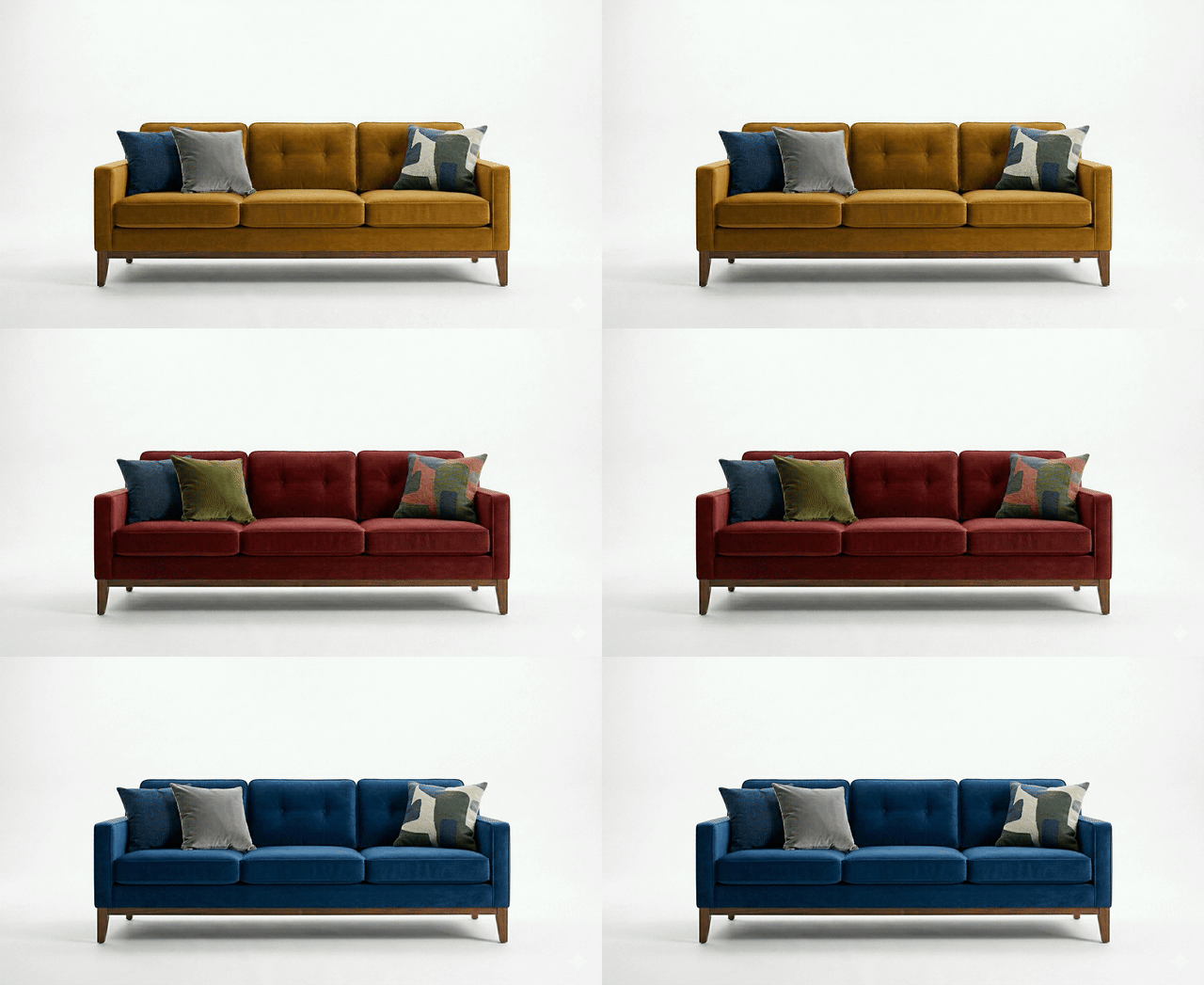
Most teams trying to use AI for product imagery are frustrated. The sofa the AI generates looks like a sofa, not their sofa. Wrong proportions, wrong fabric, wrong finish. They spend more time rejecting outputs than approving them.
The fix isn't a better prompt. It's better inputs.
Accurate geometry and OpenPBR materials become the reference layer for generation. The AI isn't guessing what your product looks like; it has the geometry and materials in front of it. Feed that into a directable image generation pipeline:
- White sweeps that match your actual finish
- Lifestyle scenes with your real product geometry
- 600 fabric options across 120 frames at 12 angles, generated in hours, not scheduled as a shoot
- Seasonal campaigns refreshed without a production crew
Land of Assets was built for this. Your 3D assets power your configurator and your AI image pipeline from the same source.
What I Learned in a Decade of Enterprise 3D#
I spent a decade learning what enterprise product teams need at scale, not what they say in a first meeting. The real need surfaces when the catalog has thousands of SKUs, engineering keeps updating dimensions, and marketing needs new imagery every quarter.
They need infrastructure that doesn't require babysitting. One managed system where every model and material lives. Update once and everything downstream reflects it: configurators, AI pipelines, and marketing sites.
They need open formats so that their investment in 3D content isn't held hostage to any single vendor's roadmap.
And they need automation so that the pipeline runs without someone coordinating each step.
Land of Assets is what I built when I got to start from scratch with that knowledge.
What's Next#
We're live at landofassets.com. If you're working on product visualization, configuration, or AI imagery and want to see what the platform looks like in practice, book a demo, or reach out.
This post is also published on Land of Assets.