Don't Fear Your Competitors
A polished competitor isn't proof of a strong business. Lessons from Deadline, Clara.io, and Threekit on validating demand, assessing real threats, and pricing on value.

A polished competitor isn't proof of a strong business. Lessons from Deadline, Clara.io, and Threekit on validating demand, assessing real threats, and pricing on value.
Many founders believe they are running a SaaS company when they are running a consulting company with good internal tools. If your team uses the platform to deliver work for clients who never log in, you are the latter, and that changes how you should hire, price, and focus.
Every new market can make your SaaS harder to use for the customers who made it successful. Stretching one framework across related markets creates a complexity tax—and gives focused competitors an opening in your original market.

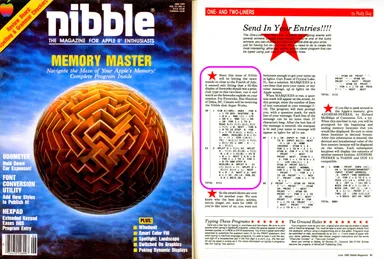
My dad's Apple IIe and a stack of magazines taught me to code by copying, breaking, and rebuilding tiny programs. By eleven, I'd squeezed a fireworks animation into two lines—and Nibble published it.
AI product imagery can lose the details that make a sofa yours. After a decade at Threekit, I built Land of Assets around a shared source of real geometry and materials for configurators and AI imagery.

Managing 3D assets shouldn't feel harder than writing the application. After building enterprise 3D infrastructure, I built Land of Assets for developers whose models have outgrown Git but whose teams don't need an enterprise platform.
This is the story of how I went from building Hollywood VFX tools to raising $65M for enterprise SaaS, and the three crucial lessons I learned along the way.
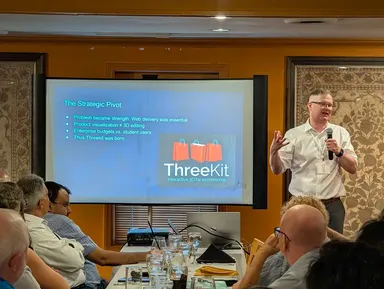
Clara.io had 100,000 users but couldn't find paying customers. An unexpected request for an office-chair configurator changed the business—and taught me why product-market fit, enterprise customers, and trust matter more than the product alone.
An open source core needs to be useful enough to earn developer trust, while leaving enterprises a reason to pay. Draw that boundary poorly, and you risk either your revenue or your community—the central challenge of Open Core.
We needed to render billions of points for Stay, and the established renderers we tried couldn't handle them. I adapted an OpenGL/C# renderer in a few days—the start of Krakatoa.

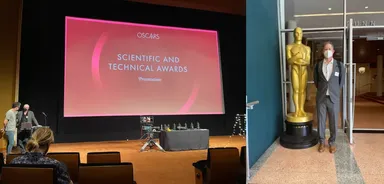
In 2002, I joined Frantic Films to write fluid simulation software. A small scheduler I built for those sims became Deadline, a render farm manager used by Blizzard, major VFX studios, and considered by the Academy for Sci Tech Awards.
After learning the hard way that chasing startups and SMBs was a dead end, I discovered why the path to sustainable SaaS growth lies in mastering enterprise sales and the 'land and expand' strategy.