Introducing WebGPU-Bench: A WebGPU Microbenchmark
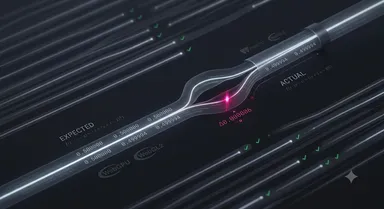
Introducing webgpu-bench, the micro-benchmark suite behind Web3D Survey’s GPU benchmark, with measurements of shader operations and code patterns available through a webpage and CLI.
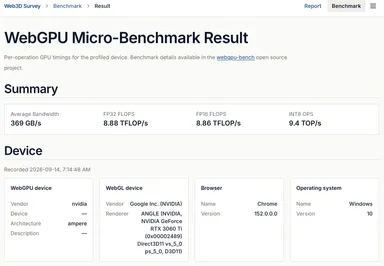
Introducing webgpu-bench, the micro-benchmark suite behind Web3D Survey’s GPU benchmark, with measurements of shader operations and code patterns available through a webpage and CLI.
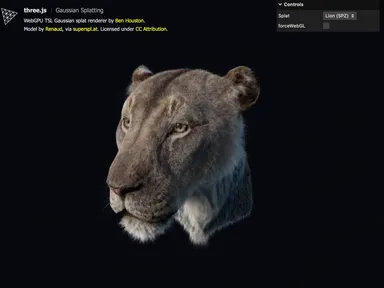
How to use Three.js's native Gaussian Splatting support (GaussianSplat, SPZLoader). Load .spz/.ksplat/.splat/glTF splats, pick a file format, and run a capture-to-render workflow with Polycam, Luma AI, Scaniverse, and SuperSplat.
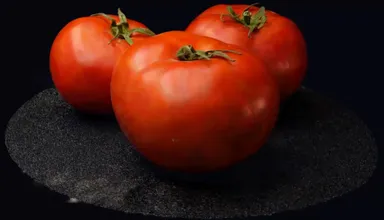
A tour of how language models generate text, how GPT-2 and newer Phi and Qwen architectures differ, and how Three-LLM implements their inference graphs with Three.js TSL compute shaders.
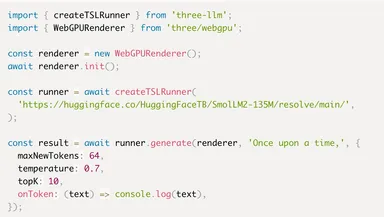
How GaussianSplatGroup gives Three.js a global back-to-front sort across multiple Gaussian splat clouds, using transform indirection, a WebGL2 CPU fallback, and grow-only buffers so camera and matrix updates stay cheap.

A small multiresolution feature grid plus a tiny MLP decoder that replaces a stack of correlated PBR textures with one compact, GPU-decoded representation. Named channels with their own activation functions, built on new fp16/half-precision support in TSL, and demonstrated on a MeshPhysicalNodeMaterial. The format is material-agnostic.
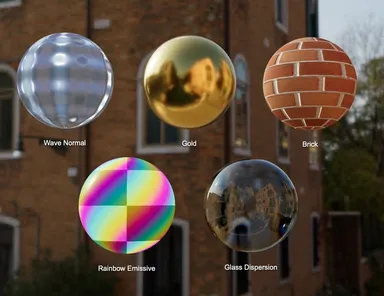
How Three.js now validates individual TSL shader expressions on WebGPU and WebGL2, with numeric diagnostics, deterministic input sampling, and support for vectors and matrices.
A short reference on the neural-network vocabulary used across the neural texture, neural material and neural appearance posts — MLP, weights and biases, ReLU, forward pass, loss, gradient descent, backpropagation, Adam, latent vectors, feature grids and decoder networks — explained once, concretely, so those posts can link here instead of re-deriving it.
How I added Gaussian Splatting to Three.js with WebGPU, TSL, a reusable GPU counting sort, SPZ v3/v4 and interoperability loaders, and SH1-SH3 view-dependent color.
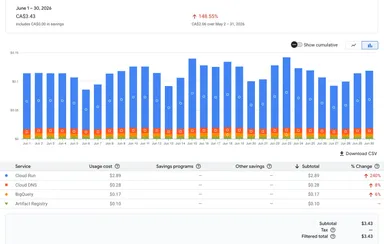
The architecture behind Web3DSurvey, two Cloud Run services, a partitioned BigQuery store, and a transparent JSON cache that let me report real-world WebGL and WebGPU support for a few dollars a month.
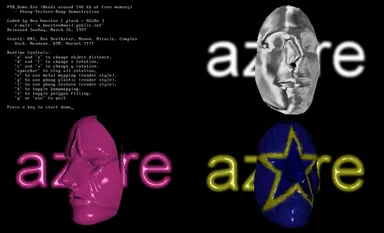
How I built real-time 3D rendering on a slow 486 with only 256 colors in VGA Mode 13h, using fixed-point math, palette quantization, matcap-style Phong lighting, and x86 assembly.
Web 3D Survey v2 rebuilds the site on TanStack Start, adds homepage support summaries, WGSL and adapter reporting, browser capability stats, and a live /machine report.
I spent ten years building fluid simulation tools for VFX: a three-day Stable Fluids prototype, sparse level sets for Scooby-Doo 2, tetrahedral and vortex solvers at Exocortex, and three pieces of my software on Harry Potter and the Deathly Hallows.