React Internals
Why does React preserve one list item's state, abandon a render, or let an animation bypass reconciliation? This series connects those everyday behaviors to fibers, scheduling, and the boundaries between React, its renderers, and the server.
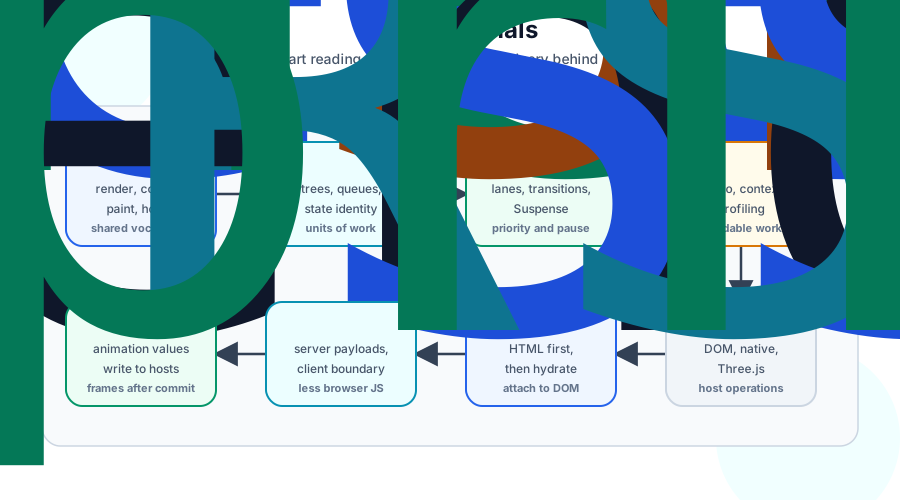
React is easy to start using because component code reads like a description of the screen you want. The cost of that ease shows up later, when you need to explain why a component rendered, why state stayed attached to one list item and not another, why a transition feels responsive, why server HTML has to hydrate, or why an animation should not run through setState on every frame.
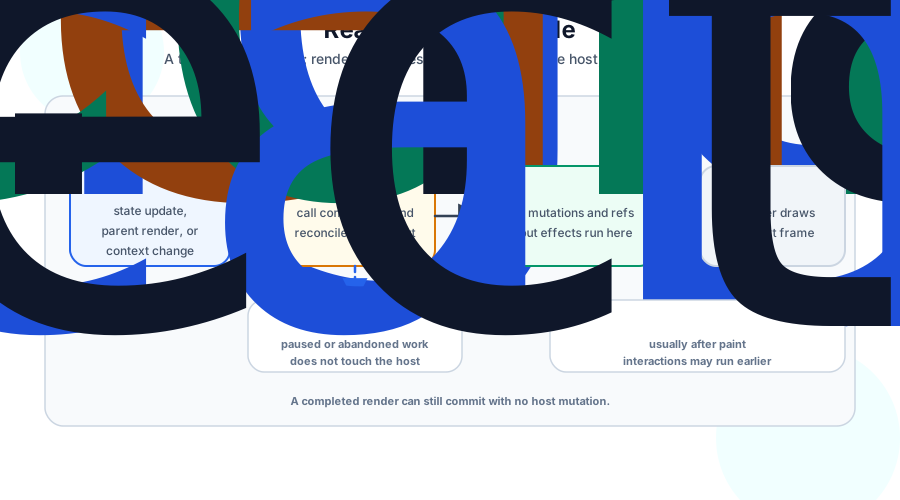
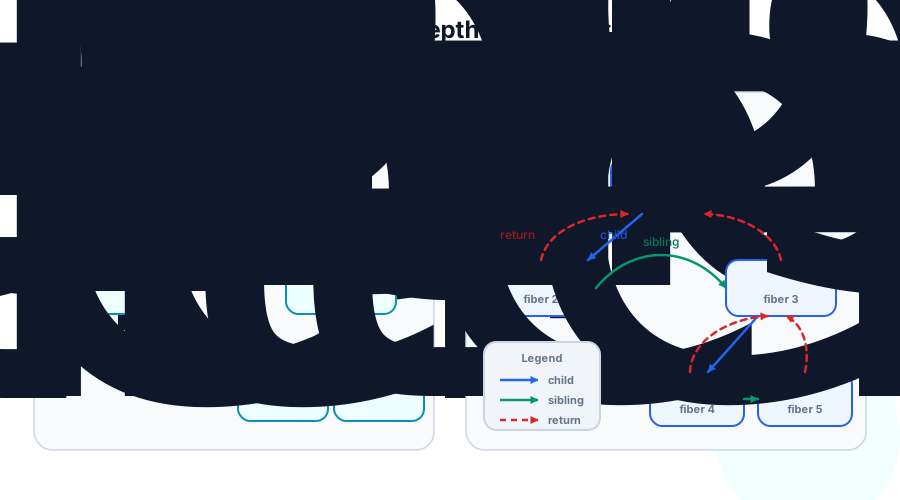
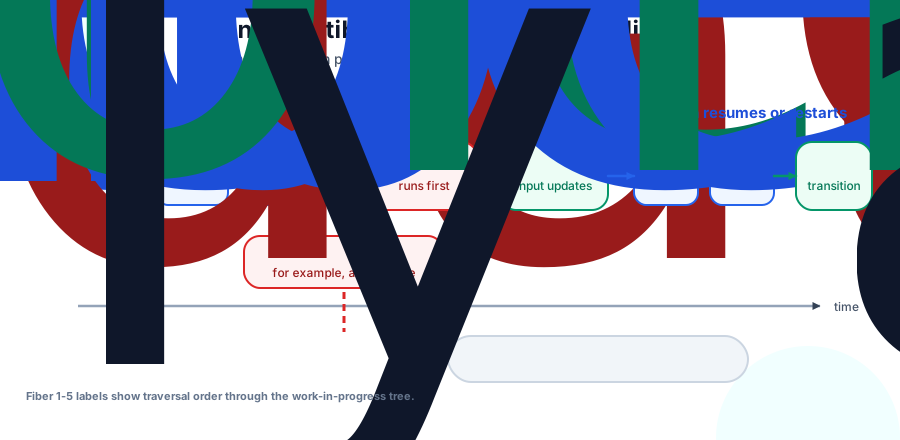
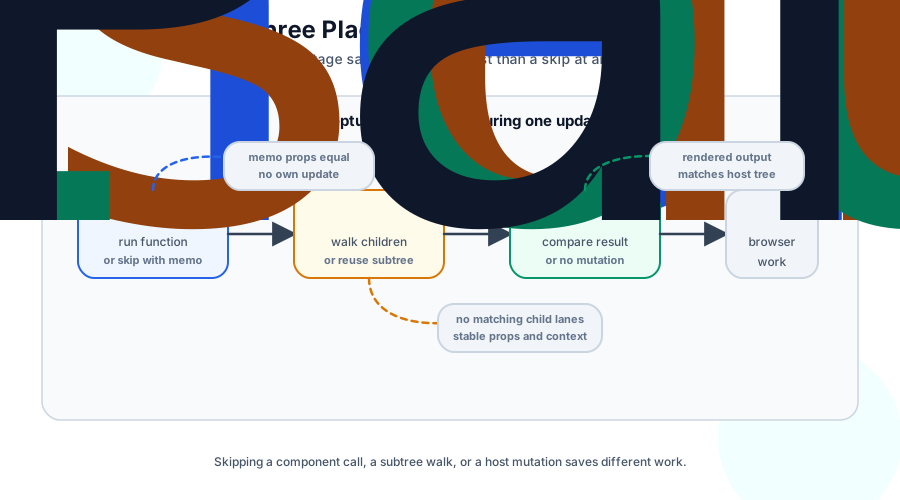
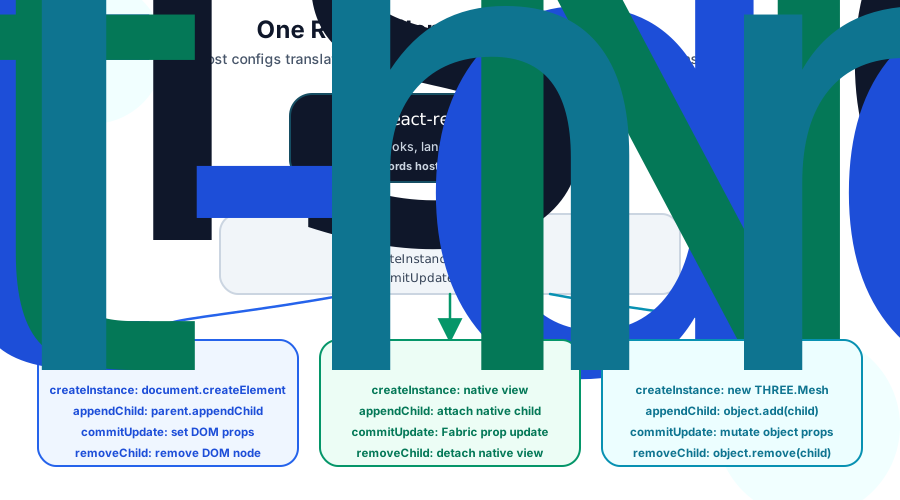
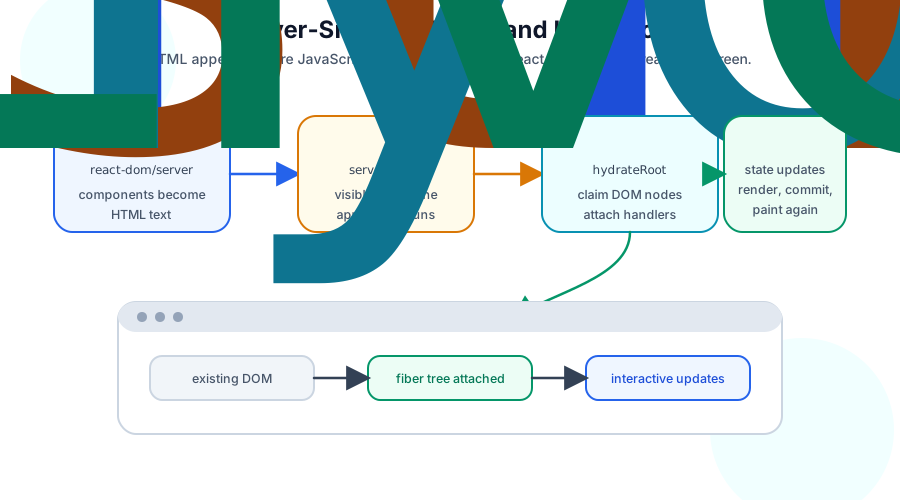
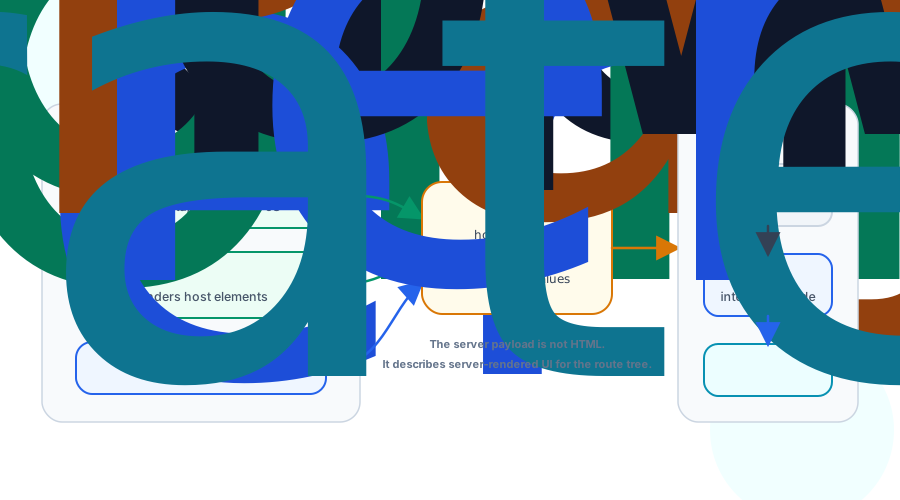
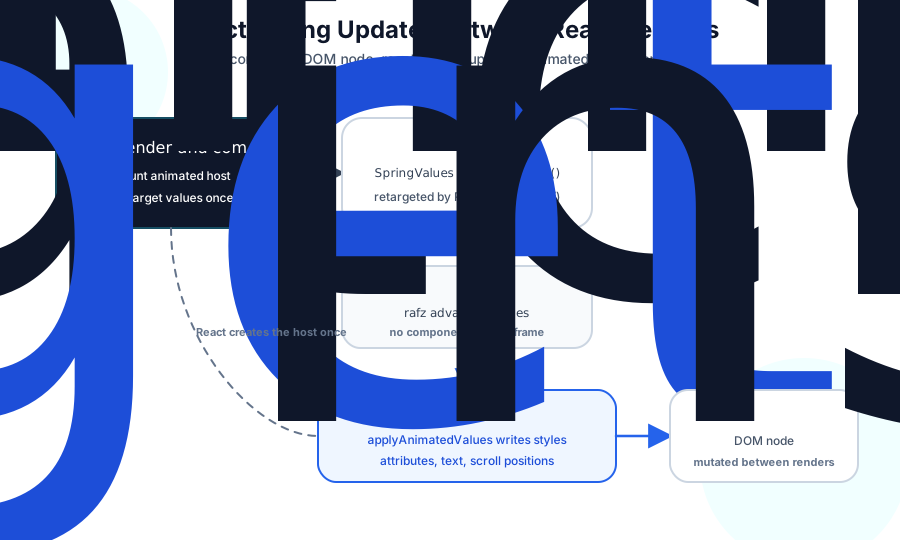
The React Internals series builds a practical model for those questions. It follows an update from the public concepts you already use, through fibers and scheduling, into optimization, renderers, server rendering, Server Components, and animation libraries that work beside React.
This series is for React developers who can already build components and want sharper names for the machinery underneath them. You do not need to read React's source code first. The articles use simplified models, small code examples, and diagrams to connect application behavior to the internals that explain it.
Read the series in order if you want the full model. Each article depends on vocabulary from the one before it.